Tricks to Transfer Gmail Emails and Attachments to Hard Drive/SD Card:Manual vs. Professional Techniques
Introduction:Why Local Gmail Backups Are Essential
Simplified ways to transfer Gmail Emails to SD Card or External Drive
Online email services are very popular among users as the data in them can be easily stored and shared online. Before users delete their online data permanently,it is required to save your important files. Backup is given the importance in order to save the data from future contingencies. In all the applications,Gmail is one of the important and most used online applications by users to save email messages,attachments,contacts etc. The users can save Gmail emails to SD Card or Hard drive to keep it safe to use for future needs.
Quick heads up:If you've got years of emails in Gmail,you might want to start this process when you have some free time - it's not exactly a 5-minute job,especially if you have a lot of data to transfer.
Common Scenarios to Move Gmail Emails to External Drives
Why do users need to move Gmail emails to hard drive or another device?
There are several reasons due to which users prefer Gmail data to external drive. Before closing Gmail account,the users need to save the important files to their hard drives to use in future. Due to the improper functioning of Gmail,users may lose their data completely. To save the data from being eliminated users can create a copy of whole data in hard drive. This will help users to access the database in case Gmail messages are removed from the server. Even if the data size exceeds the storage limit of Gmail,users can delete the data after making a copy of data on the external hard drive.
Method 1:Copy/Download Single Email Message to a Storage Drive
- Open the specific email message in your Gmail account.
- Click the Print icon in the upper-right corner.
- Change your printer destination to Save as PDF.
- Click Save and select your connected External Hard Drive or SD Card as the destination path."
Now,let us move to the procedures to transfer Gmail emails to SD Card –
Manual Trick – Gmail emails can be easily copied to devices like external hard drives using Google Takeout servicesthat help to save Gmail emails to a local machine. The best thing about this method is users can backup specific data and save it to the compressed file. Google Takeout as the name explains that Gmail data can be taken out and save to an external drive.
While Google Takeout is a free native utility,it poses severe roadblocks for massive mailboxes. It lacks date-range data filtration,only saves data in a raw. mbox format unreadable without desktop clients like Thunderbird,and often fails mid-download,forcing you to start all over.
Method 2:Download Entire Gmail Mailbox via Google Takeout Services
- Login to Google Account by entering the correct username and password.
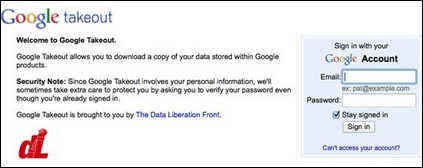
Make sure you're using the same Google account that has your Gmail data - sounds obvious,but you'd be surprised how many people accidentally log into the wrong account!
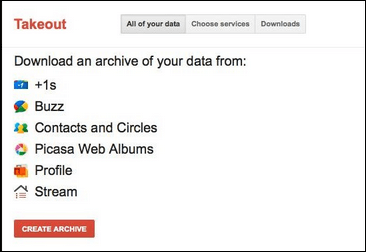
- Select the data items as per your needs that you want to move to SD Card. If you want to save archive files to import Google Archive to another Gmail account.
- Then,click on the Create Archive button start the downloading process. Once the downloading starts,the users can check the status as displayed.
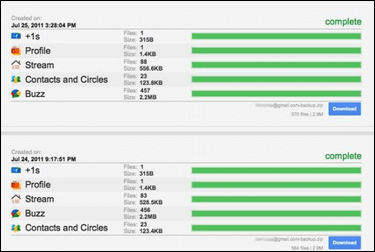
- After completing the download process,click on the Save button to save Gmail data to external hard drive.
Now,all the items are saved in a ZIP folder at the desired location. After getting Gmail emails,you can save these emails on your desktop and then move the saved Gmail account emails on hard drive in an easy manner.
The Core Limitations of Relying on Google Takeout
There are several challenges which the users face while trying to move Gmail data to SD Card. They are as follows –
- The manual trick is lengthy and time-consuming.
- The manual solution is full of confusions. Users sometimes find it complex.
- Emails are not downloaded properly.
- Creating issues in downloading process.
Method 3:Save Emails to External Hard Drive/SD Card Using Professional Software
Third-party utility Softaken provides an excellent tool to create backup of Gmail emailson hard drive. This helps the users to save Gmail data to hard drive in an efficient manner. The software is a user-friendly technique to move Gmail data to SD Card. The tool helps to save Gmail data in file formats like PST,EML,EMLX,MSG,and MBOX. The tools grants pause and resume process which helps in case of slow internet connection. Without any data loss and delays,the users can complete the entire process of transferring Gmail emails to SD card. With the easy interface,the users will not face any difficulties.
- Download &Launch:Install and launch the Softaken Gmail Backup Pro utility on your Windows PC.
- Authenticate Safely:Enter your Gmail username alongside your generated Google App Password,then click the Connect to my Gmail account button.
- Folder Selection:Review live account tree hierarchy and checkmark the specific folders (Inbox,Sent,Custom Folders) the user wishes to transfer.
- Pick Your Output Format:Select preferred local file extension—such as PST for Outlook,MBOX,or EML.
- Set Target Destination:Click the Browse button and directly navigate to connected External Hard Drive or SD Card.
- Execute:Click the Process Now button to start a high-speed,secure export that completely preserves your email formatting,attachments,and folder integrity.
Pro tip:The pause and resume feature is a lifesaver if your internet connection is unstable - you won't have to start all over again if the connection drops.
Final Thoughts
As saving backup of Gmail emails is found to be the most in Google searches. The above write-up will help users to learn to move Gmail data to hard drives. An inbuilt Google Takeout service with its pros and cons is discussed. Moreover,a software technique is also provided to perform the backup task without much burden.